

Video vs Photography Marketing Analytics: What Does the Data Actually Tell Us?

Visual Marketing Lab Insights
This one's for the data geeks.
You’ve booked a marketing shoot.
You've got a limited budget.
So where should you put the money?
Photography? Video? Or both?
We could give you our opinion.
But where's the fun in that?
Instead, let's look at the numbers.
Because one of the things we believe strongly at Visual Marketing Lab is that great marketing content shouldn't just look good.
It should have a job to do.
And ideally, we should be able to measure whether it's doing it.
So we're going to dig into the data behind photography and video marketing, explain what those numbers actually mean in plain English, and, most importantly, look at how you can measure whether your next marketing shoot actually delivered a return.
First: Photography vs Video Isn't Really a Fight
Let's get something out of the way.
We love photography.
We love video.
And we don't think businesses should be choosing one and abandoning the other.
They're different tools.
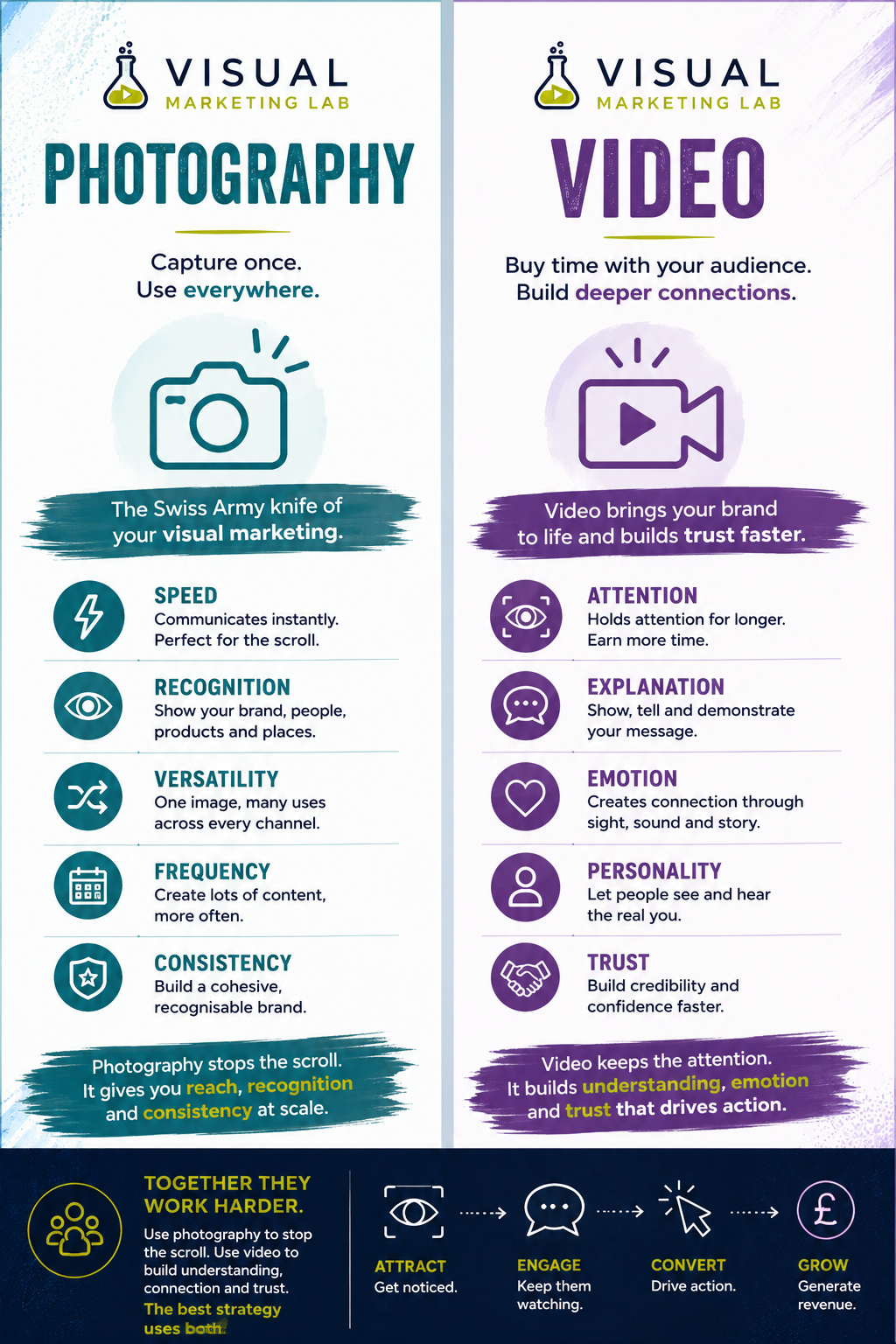
Think of photography as the Swiss Army knife of your visual marketing.
One well-planned photography shoot can give you assets for:
Your website
LinkedIn
Instagram
Facebook
Google Business Profile
Blog posts
Email campaigns
Proposals
Presentations
PR
Recruitment
Brochures
Advertising
Sales material
A photograph can communicate something in a fraction of a second.
Video does something different.
Video buys you time with your customer.
Instead of showing someone what your business looks like, you can explain what you do.
They can hear your voice.
See your personality.
Watch your product being used.
Meet your team.
Hear your customers talking about their experience.
See the transformation you provide.
And that's where things start getting interesting.
The Numbers Behind Video Marketing
According to Wyzowl's 2026 State of Video Marketing research, 91% of businesses use video as a marketing tool, while 93% of video marketers consider it an important part of their overall strategy.
But usage doesn't necessarily equal results.
So let's look at ROI.
82% of video marketers say video has given them a good return on investment.
The same research found:
93% say video increased understanding of their product or service.
93% say video increased brand awareness.
85% say video helped generate leads.
83% say video directly increased sales.
82% say video increased website traffic.
82% say video increased the amount of time visitors spend on their website.
That's quite a collection of numbers.
But there's an even more interesting statistic.
85% of consumers surveyed said they'd been convinced to buy a product or service after watching a video.
And 63% said that when they want to learn about a product or service, they'd most like to watch a short video.
So when we say video can help move someone towards a buying decision, we're not simply talking about getting more views.
We're talking about helping customers understand enough to make a decision.
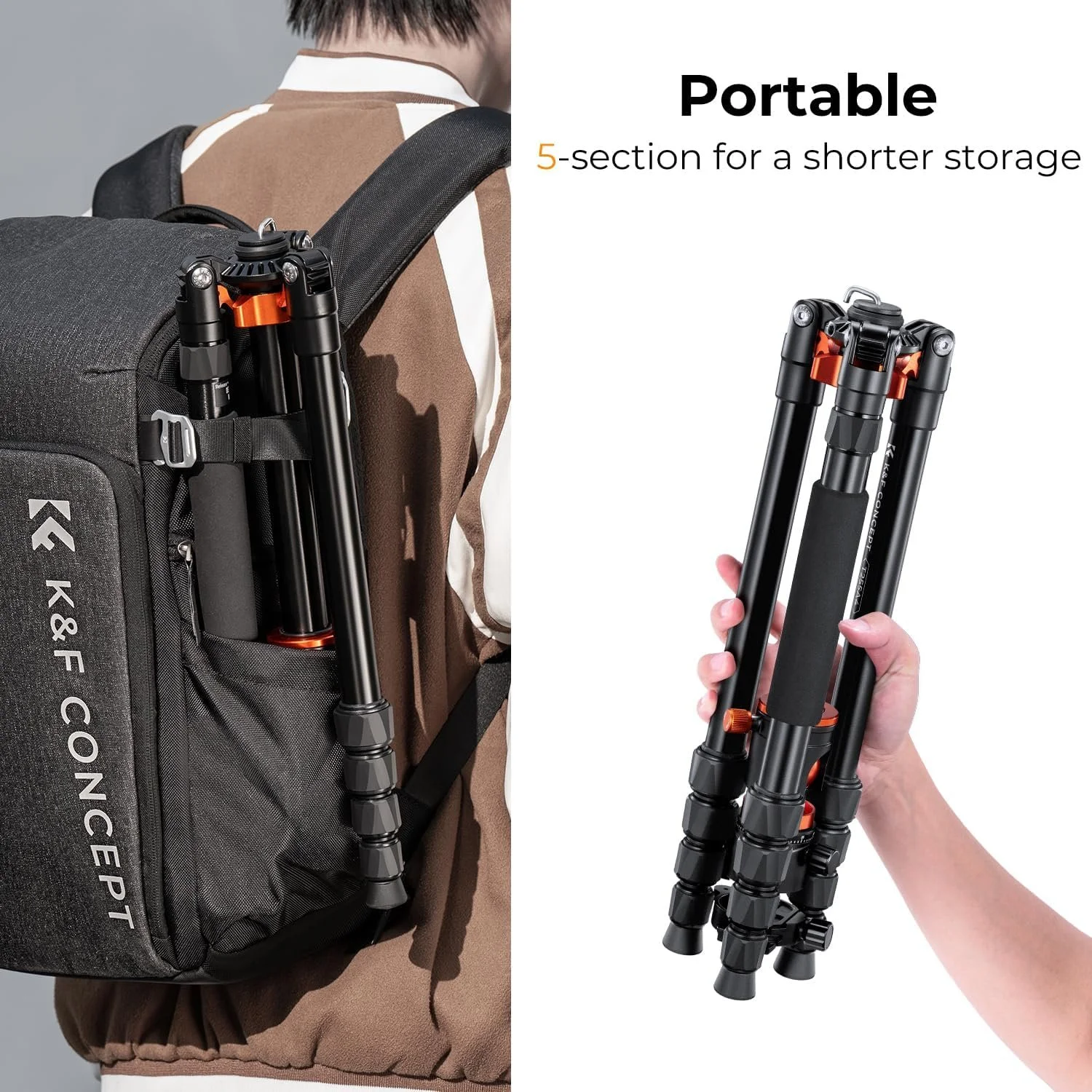
A Good Tripod
If you're filming educational, testimonial or founder-led videos, consistency matters. A solid tripod gives you repeatable framing and makes it much easier to batch-record content.
But Here's the Statistic We Really Like
89% of consumers say video quality impacts their trust in a brand.
Read that again.
Not engagement.
Not likes.
Trust.
That's incredibly important.
Because marketing isn't really about getting somebody to watch something.
Ultimately, you're trying to make someone comfortable enough to take the next step.
That might be:
Watch → Visit → Research → Enquire → Buy.
If you're selling a £20 product, that trust hurdle might be relatively small.
If you're asking somebody to spend £5,000, £20,000 or £100,000 with your business, it's considerably bigger.
A potential customer might want to know:
"Who are these people?"
"Do they know what they're talking about?"
"Can I trust them?"
"Have they done this before?"
"What would it be like working with them?"
A photograph can start answering those questions.
A well-made video can answer several of them simultaneously.
Why Video Is So Powerful for Building Trust
Imagine two accountants.
Accountant A has a professional headshot and a paragraph explaining that they help growing businesses manage their finances.
Accountant B has the same professional photography.
But underneath it is a 90-second video.
They explain who they help.
They explain the biggest financial mistake they see growing businesses making.
They explain their approach.
You hear their voice.
You see how they communicate.
You get a sense of their personality.
Before you've ever spoken to them, you've effectively started getting to know them.
That's the hidden ROI of video.
It can shorten the distance between stranger and trusted expert.
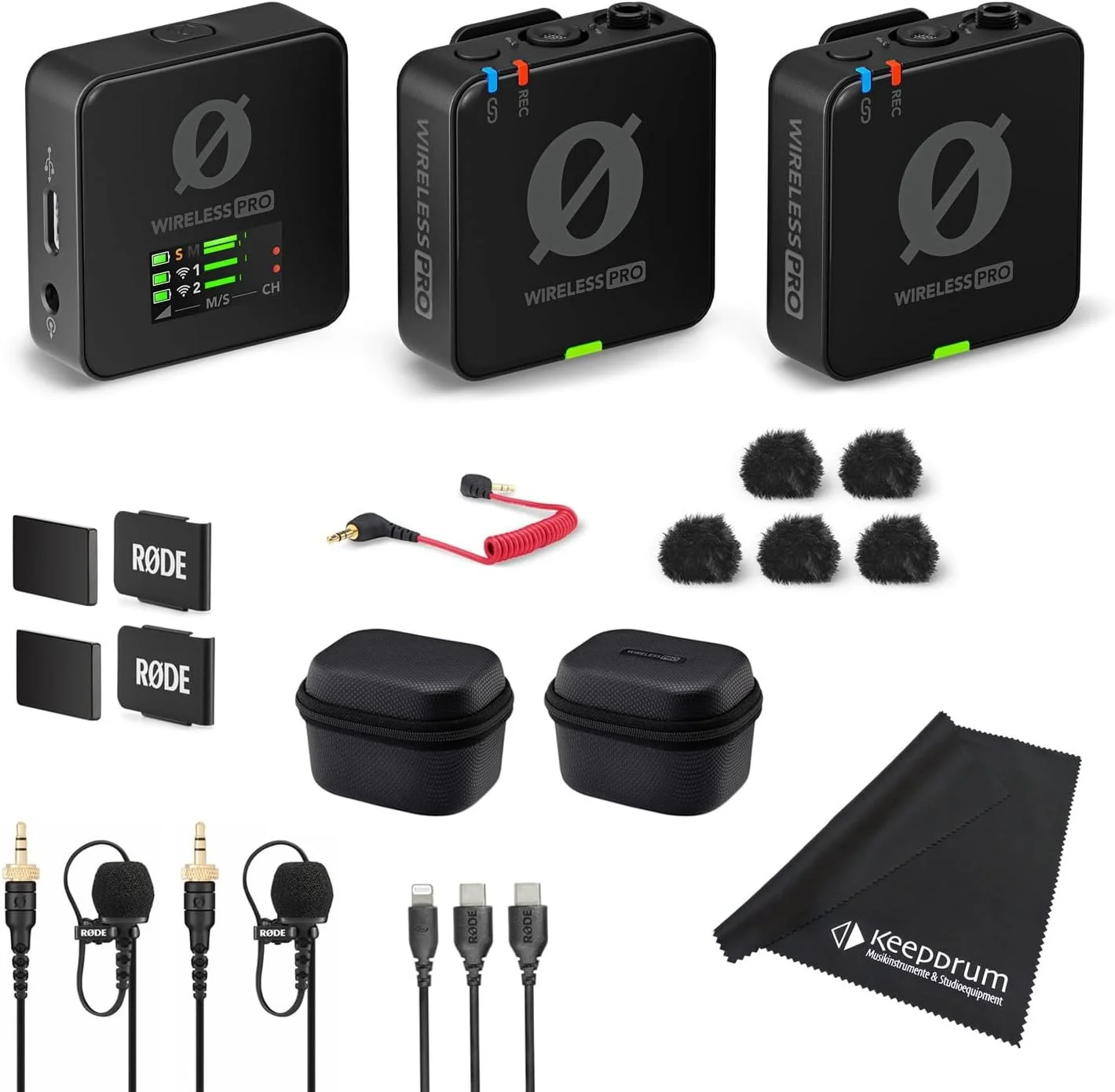
Wireless Microphones
People will tolerate imperfect pictures much longer than they'll tolerate terrible sound.
For interviews, testimonials and talking-head content, a wireless microphone system can make a huge difference.

Video Isn't Just an Awareness Tool Either
There's another interesting piece of research from Google and Boston Consulting Group.
Their 2025 research looked at more than 10,000 US shoppers.
Among shoppers who said digital video played a role in their purchase journey:
50% said video made them aware of products or brands.
43% said it got them interested in buying.
45% said it helped them choose which product or brand to purchase.
34% said it prompted them to buy a specific item.
That's important.
Because businesses often think:
"Video is good for getting attention."
It is.
But video can potentially work much further down the customer journey.
Awareness → Interest → Consideration → Decision → Purchase.
That's why a single "company promo video" isn't really a video strategy.
Different videos should have different jobs.
So Does Photography Still Matter?
Absolutely.
And the data supports that too.
HubSpot's 2025 marketing research found that images remained one of the most commonly used marketing formats.
When marketers were asked which content formats delivered the highest ROI:
Short-form video came first at 21%.
But images weren't far behind.
Images came second at 19%.
That's why we don't subscribe to:
VIDEO = GOOD
PHOTOGRAPHY = OLD
It's nonsense.
Instead:
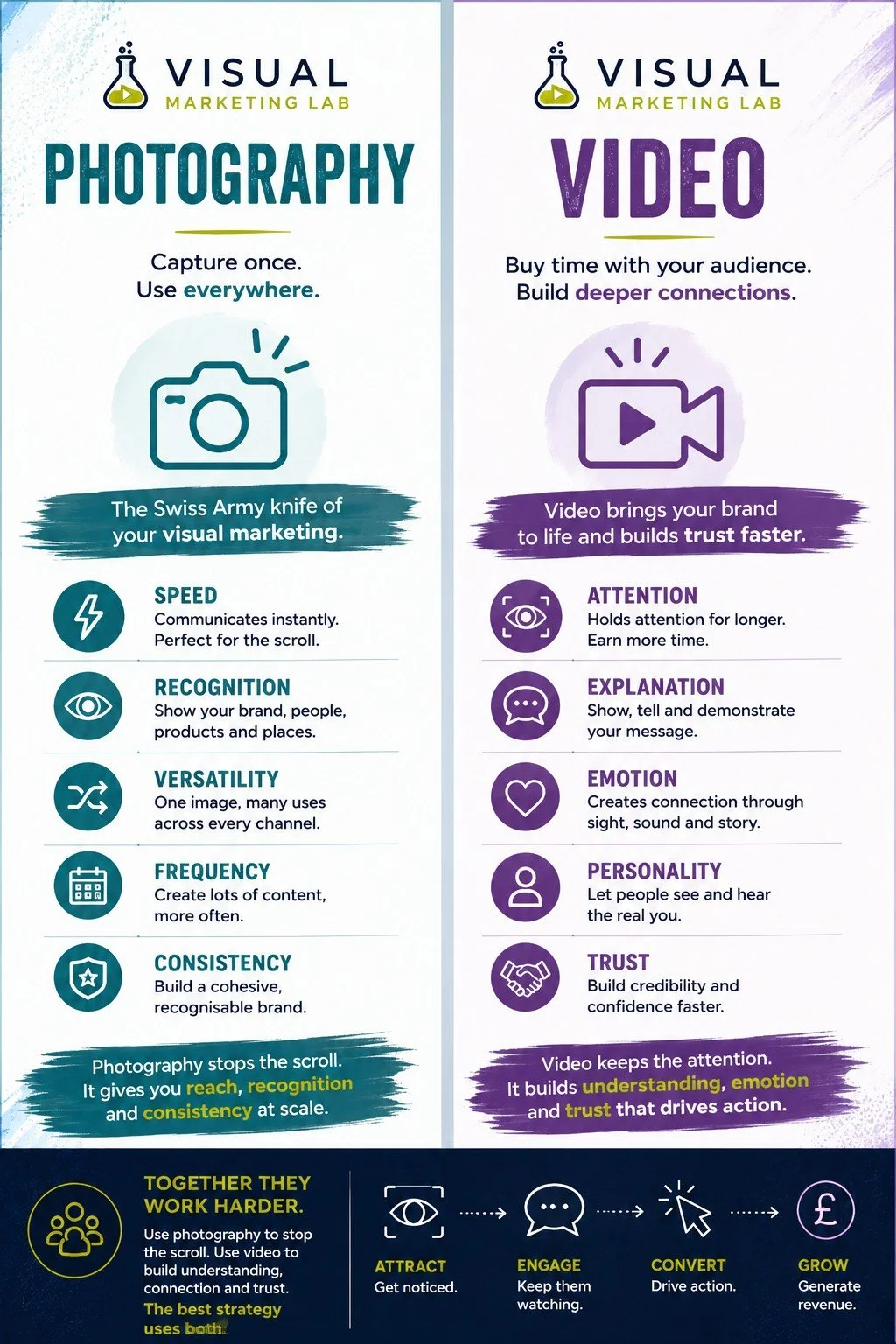
Photography gives you breadth.
Video gives you depth.
And a strong visual marketing strategy needs both.
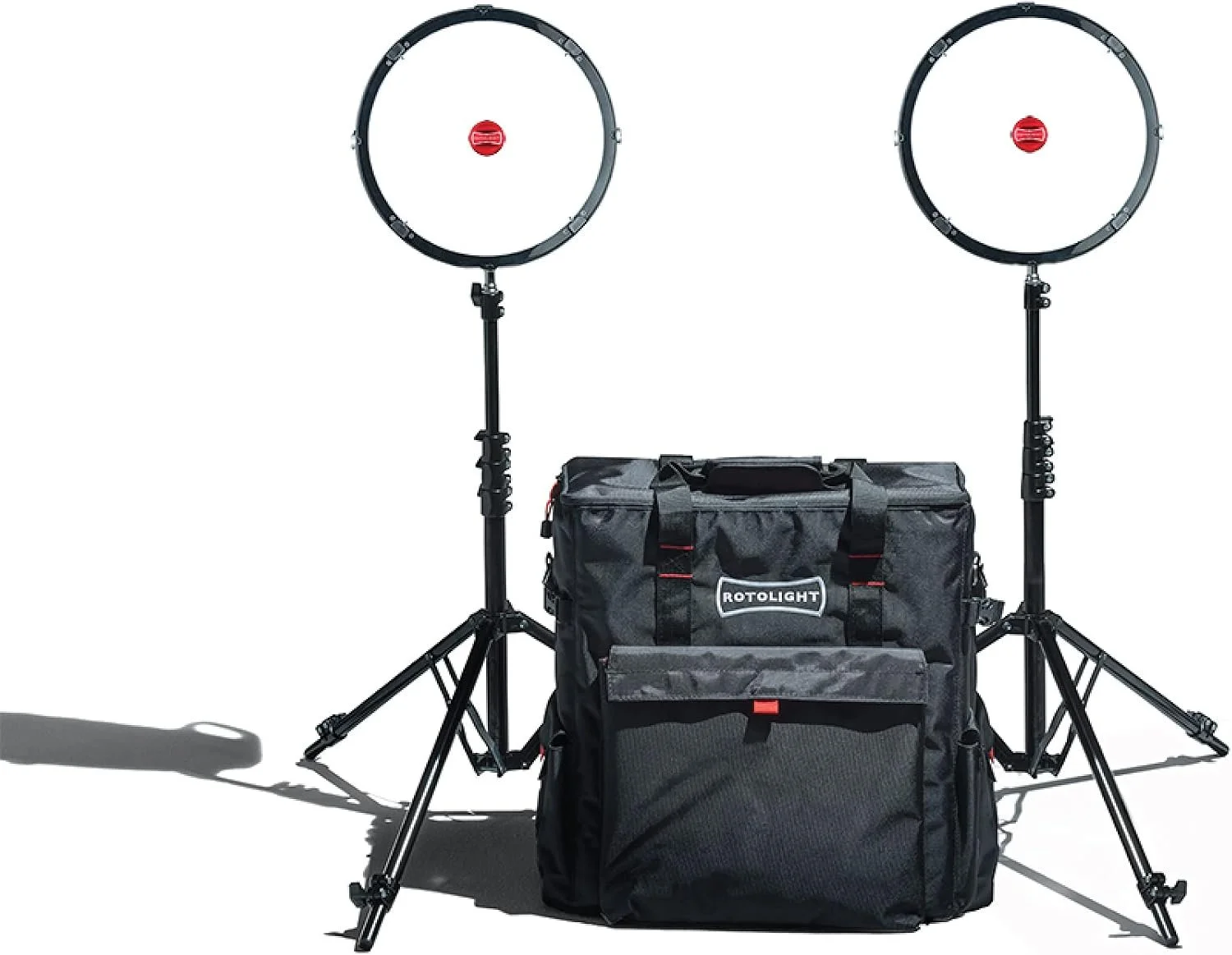
LED Lighting
Remember that statistic about video quality affecting brand trust?
Lighting is one of the quickest ways to make content look more professional.
You don't necessarily need an enormous studio. A good LED light and softbox can dramatically improve a simple talking-head setup.
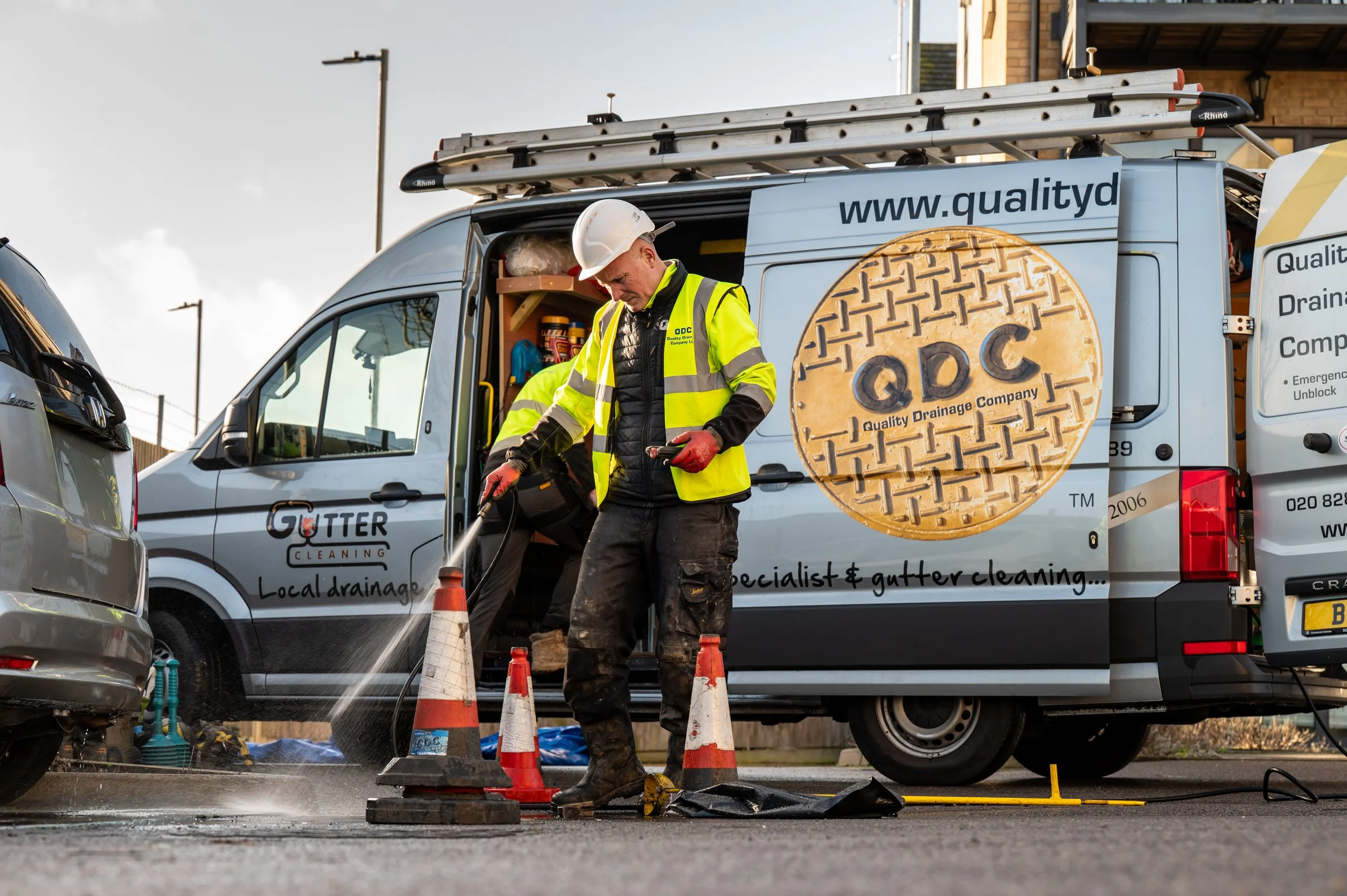
Photography Has One Huge Advantage: Speed
Imagine you're scrolling LinkedIn.
You might spend half a second deciding whether something deserves your attention.
A great photograph doesn't need 30 seconds.
It doesn't need sound.
It doesn't need someone to press play.
It communicates immediately.
That's incredibly powerful.
Photography is particularly good for:
Recognition.
Showing your people, products, locations and brand.
Consistency.
Giving your marketing a recognisable visual style.
Frequency.
Allowing you to publish lots of different content without constantly filming.
Versatility.
One photograph can potentially appear across ten different marketing channels.
Stopping power.
A strong image can interrupt somebody's scroll before they've read a single word.
Video's Advantage: Time + Emotion + Explanation
Video gets another opportunity.
Once you've stopped someone...
Can you keep them?
A photograph might earn you a second of attention.
A strong video might earn you 10 seconds.
30 seconds.
Two minutes.
Maybe ten minutes.
And every additional second gives you an opportunity to communicate something.
That's why metrics such as watch time and audience retention are so interesting.
A video receiving 10,000 views where everybody leaves after three seconds might actually be less valuable than a video receiving 1,000 views where your ideal customers watch 80% of it.
Views make us feel good.
Attention tells us whether the content actually worked.
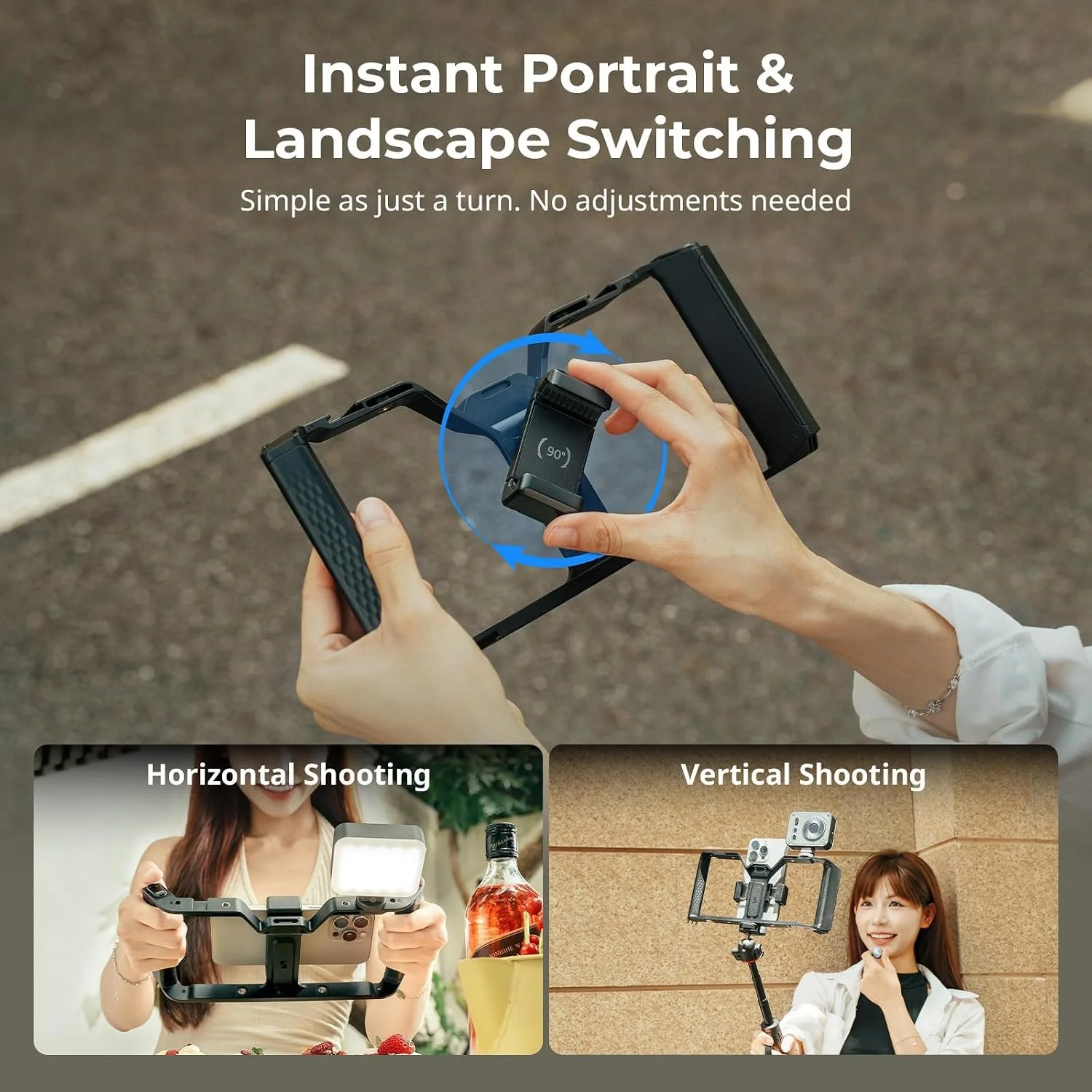
Content Rig
You don't need a cinema camera to start testing video.
For businesses creating regular Reels, Shorts and LinkedIn videos, a phone tripod or smartphone cage can be one of the best-value pieces of equipment you buy.
STOP Measuring Marketing Shoots by How Much Content You Received
Here's something we think needs to change.
Businesses often judge a shoot like this:
"We received 150 photographs and 12 videos."
Great.
But that doesn't tell us whether the shoot was successful.
Imagine instead saying:
"Our new content generated 23,000 targeted impressions, increased our website engagement, generated 47 enquiries and influenced £32,000 of sales."
Now we're talking.
The number of files delivered isn't the ROI.
What those files go on to achieve is the ROI.
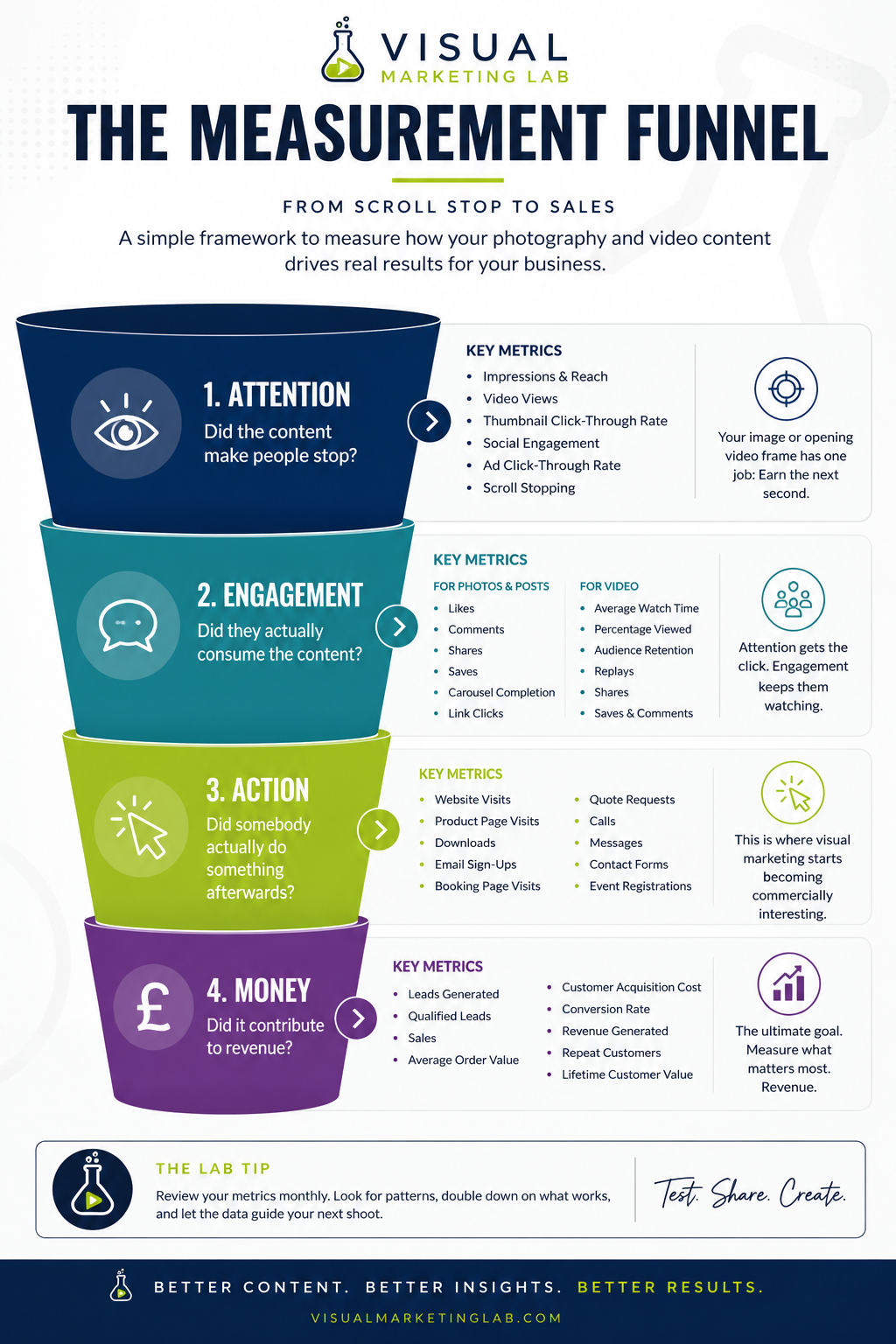
The Visual Marketing Lab Measurement Funnel
Here's a much simpler way of measuring your visual content.
We'd break it into four stages.
1. ATTENTION
Did the content make people stop?
Look at:
Impressions
Reach
Video views
Thumbnail click-through rate
Social engagement
Scroll stopping
Ad click-through rate
Photography can be incredibly powerful here.
Your image or opening video frame has one job:
Earn the next second.

2. ENGAGEMENT
Did they actually consume the content?
For photography and social posts, look at:
Likes
Comments
Shares
Saves
Carousel completion
Link clicks
For video, things get even more interesting:
Average watch time
Percentage viewed
Audience retention
Replays
Shares
Saves
Comments
If everyone disappears five seconds into your two-minute video, something isn't working.
That's useful information.
Don't take it personally.
Test something different.
That's what the Lab is all about.
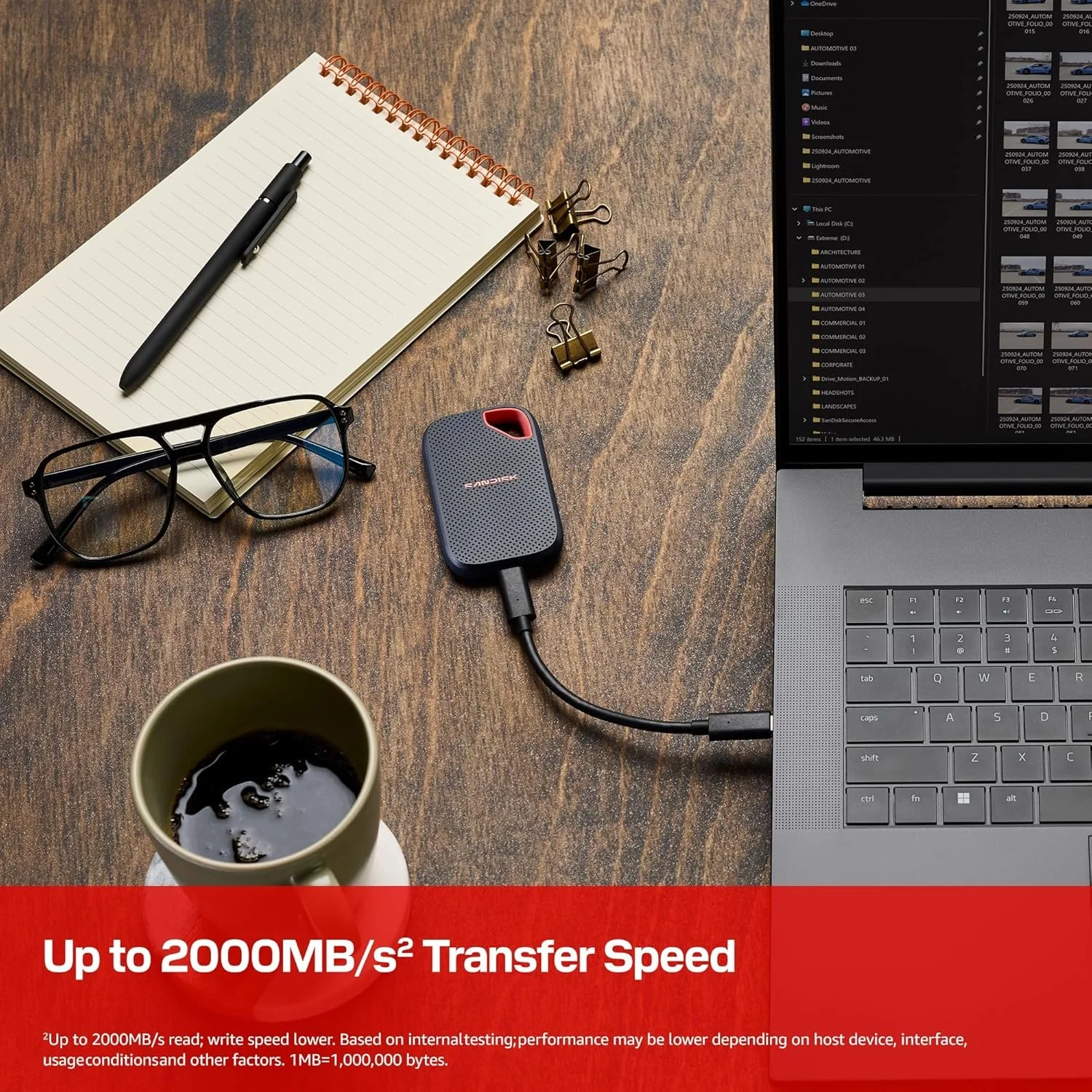
External SSD
There's another consequence of creating lots of video.
Storage.
Video files get big very quickly.
A portable SSD makes storing, organising and backing up your marketing asset library much easier.
3. ACTION
Did somebody actually do something afterwards?
Look at:
Website visits
Product page visits
Downloads
Email sign-ups
Booking-page visits
Quote requests
Calls
Messages
Contact forms
Event registrations
This is where visual marketing starts becoming commercially interesting.

4. MONEY
Finally...
Did it contribute to revenue?
Track:
Leads generated
Qualified leads
Sales
Average order value
Customer acquisition cost
Conversion rate
Revenue generated
Repeat customers
Lifetime customer value
Suddenly that photography or video shoot isn't just a creative expense.
It's a marketing investment that can actually be evaluated.
Let's Put Some Numbers Around It
Imagine a business spends:
£1,500 on a marketing content shoot.
The shoot produces photography, short-form video, testimonials and website content.
Over the following six months, that content contributes to:
40 enquiries.
Let's say 10 become customers.
And the average customer is worth:
£1,000.
That's:
£10,000 revenue.
Against:
£1,500 content investment.
A simple marketing ROI calculation would be:
(Revenue attributable to the investment - Investment) ÷ Investment × 100
So:
(£10,000 - £1,500) ÷ £1,500 × 100
= 567% ROI
Now we're having a much more useful conversation than:
"Did you like the photographs?"
Of course, real attribution is rarely that neat. A customer may have watched a video, read three LinkedIn posts, visited your website twice and then received a recommendation before finally enquiring.
But tracking something is considerably better than tracking nothing.
One Shoot Shouldn't Equal One Campaign
This is another place where ROI gets interesting.
Suppose you invest £2,000 in one well-planned marketing shoot.
You might create:
50+ brand photographs
30 B-roll clips
10 short-form videos
3 customer testimonials
5 FAQ videos
1 homepage video
10 team portraits
Website banners
Now imagine those assets are used across:
Your website
LinkedIn
Instagram
Facebook
YouTube
Email marketing
Blogs
Google Business Profile
Sales presentations
Proposals
Recruitment
Advertising
And they're used repeatedly for 6–12 months.
Suddenly the question isn't:
"How much did the shoot cost?"
It's:
"How much marketing value can we extract from the shoot?"
That's a completely different mindset.

Want to Get Geekier? Track Your Content Properly
If you're investing in visual marketing, we'd recommend creating a simple measurement dashboard.
You don't need an enormous enterprise analytics system.
Start with:
Google Analytics
Your social platform analytics
YouTube Analytics
Your email marketing analytics
CRM lead data
Enquiry numbers
Sales data
Then review performance monthly.
Ask:
Which photographs got the highest engagement?
Which videos held attention longest?
Which topics generated enquiries?
Which calls-to-action got clicked?
Which landing pages converted?
Which customer stories generated interest?
And then use those answers to plan your next shoot.
That's where things get exciting.
Your previous content tells you what your next content should be.
The Visual Marketing Lab Verdict
So...
Photography or video?
We'd choose both.
But for different reasons.
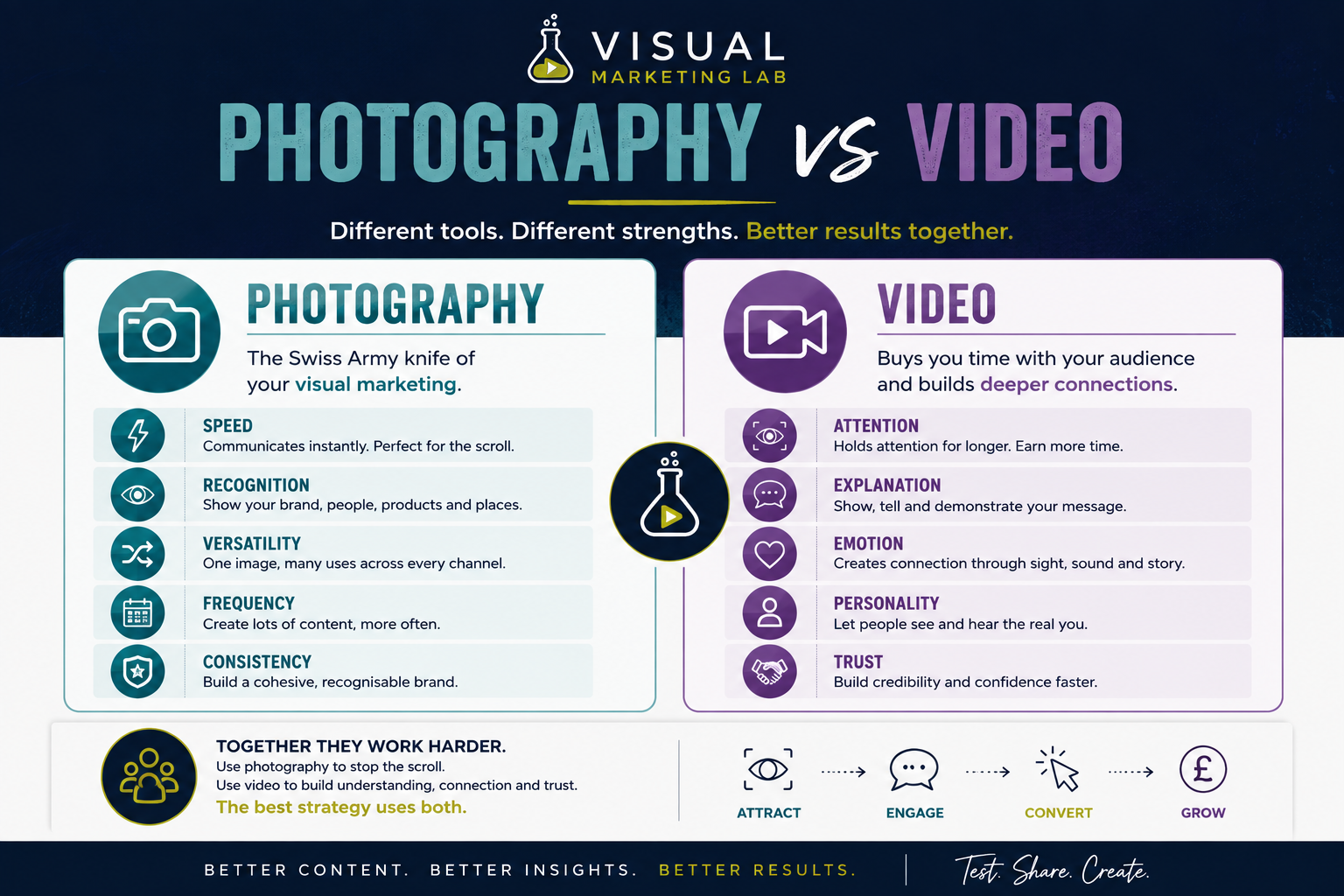
Photography is brilliant for:
Speed + Recognition + Versatility + Frequency + Brand Consistency
Video is brilliant for:
Attention + Explanation + Emotion + Personality + Trust
And if you're asking us which has the greatest ability to accelerate trust?
Video wins.
There's something incredibly powerful about seeing and hearing another human being.
But video doesn't replace great photography.
The best marketing ecosystems use photography to repeatedly get the brand noticed...
…and video to turn that attention into understanding and trust.
A Marketing Shoot Should Start With Data And End With Data
This might be the biggest takeaway from this entire article.
Don't start your next shoot by asking:
"What photographs should we take?"
Or:
"What videos should we make?"
Start with:
"What are we trying to achieve?"
More awareness?
More website traffic?
More enquiries?
Higher conversion?
Greater trust?
Better recruitment?
More repeat customers?
Then create the photography and video that gives you the best chance of achieving that outcome.
Run the campaign.
Measure it.
Learn from it.
Then create the next round of content based on what you've discovered.
That's not simply content creation.
That's visual marketing.
And that's exactly what we're here to test.
Test. Share. Create.
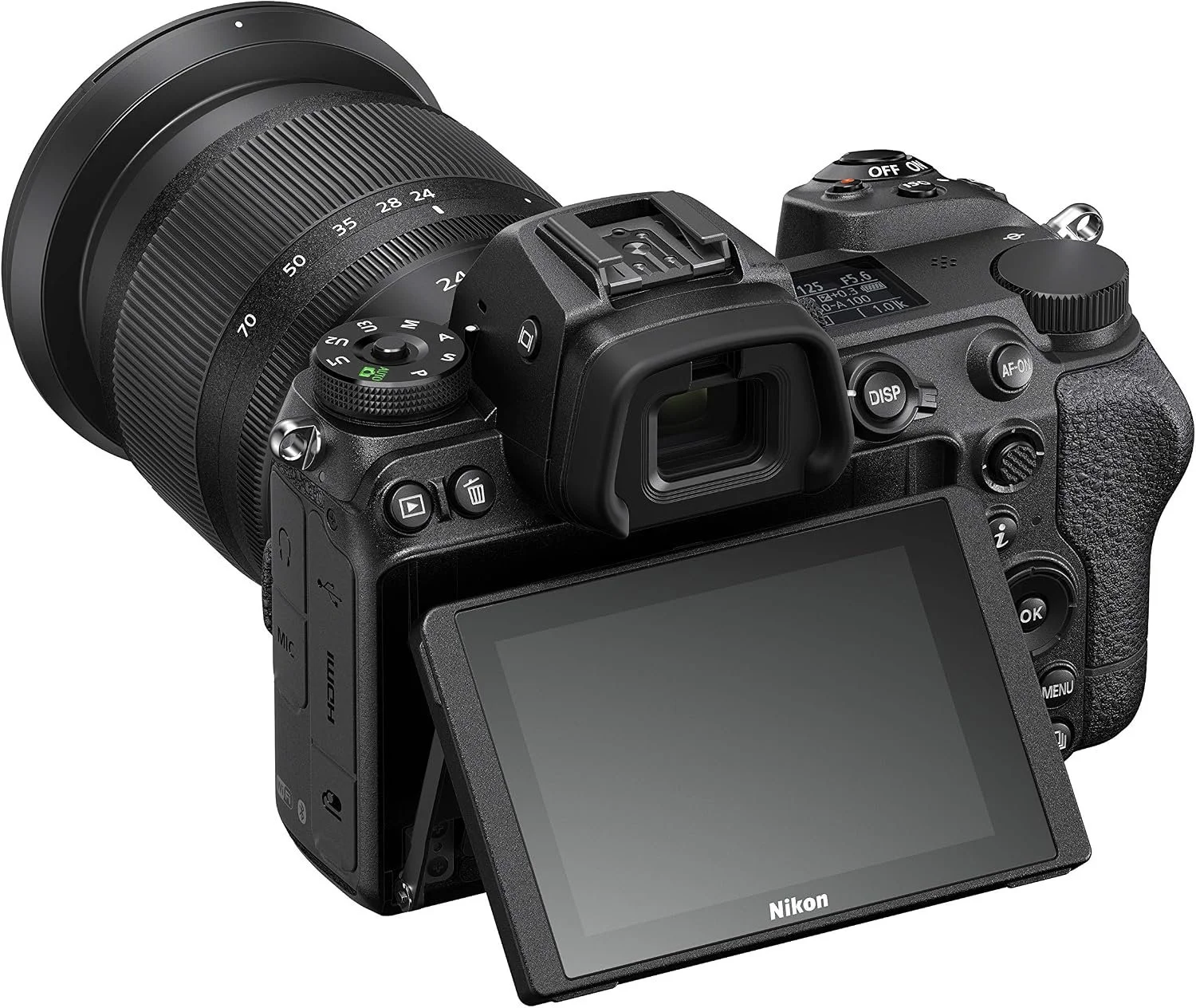
Creative Essentials: Tools That Help You Measure & Create Better Content
Some of the products we feature in Visual Marketing Lab may contain affiliate links. If you buy through one of those links, we may receive a small commission at no additional cost to you. It helps us keep testing, creating and sharing what we learn.
This article also creates some very natural opportunities to recommend the equipment and tools that help businesses improve the quality of the content they're measuring.


The Aim Of Create The Image
Become the UK’s most trusted strategy-first visual marketing partner
Trusted by 100’s of businesses for
Strategy First Marketing
Creating Scroll-Stopping Content
Visual Marketing That Works
Testing Better Marketing